Badu(Xiamen) Technology Co., Ltd
What is a Gel Ice Pack?
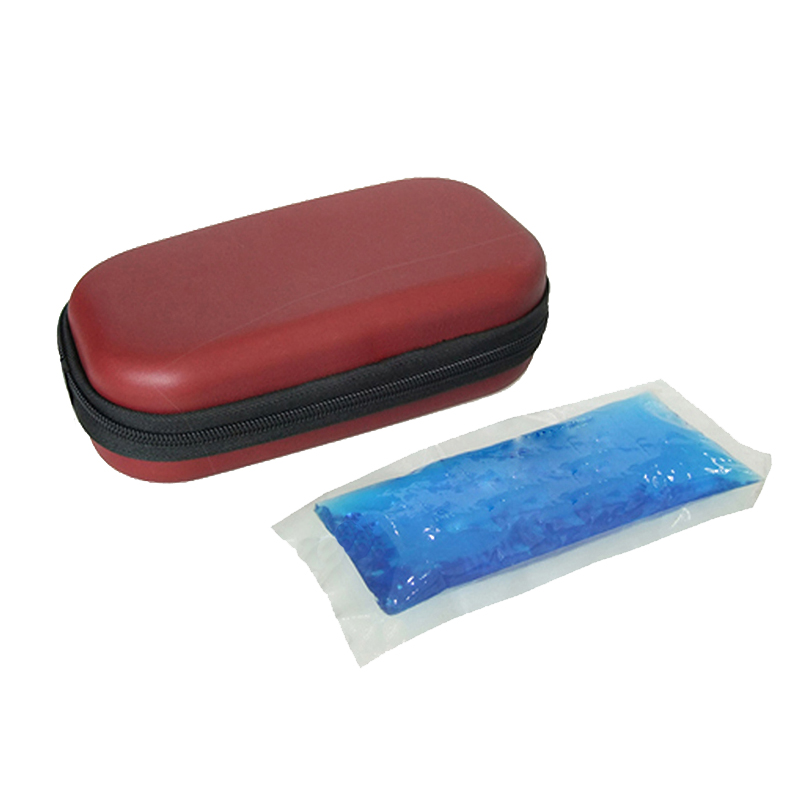
Commonly referred to as an **ICEGEL** or **Gel Ice Pack**, it is a **phase-change cold storage medium** based on **high-molecular polymers**. At its core lies a "phase-change material" capable of efficiently absorbing, storing, and releasing significant amounts of cold energy within a specific temperature range (typically around 0°C).
While its working principle is similar to ordinary ice, its performance is far superior:
* **Ordinary Ice** Absorbs heat when melting at 0°C, but once fully melted, its temperature rises rapidly, resulting in a short duration of effective cooling.
* **Gel Ice Pack** Maintains a temperature near its phase-change point over an extended period (e.g., -5°C to 5°C), releasing cold energy steadily and consistently. This leads to **longer-lasting and more stable cooling**.
The description **"gel-like at room temperature, solid when frozen"** perfectly illustrates this phase-change behavior.
**What are Gel Ice Packs Made Of ?**
The primary component is a **water-based polymer gel**. Its specific material composition is as follows:
1. **Main Solvent: Deionized Water**
Serves as the primary carrier for the phase-change process. Water's high latent heat makes it an efficient base for cold storage.
2. **Gelling/Thickening Agent (Key Polymer Material):**
* **Common Types**
* **Sodium Polyacrylate** The most widely used type, known for its excellent water absorption and retention, forming a stable, transparent gel.
* **Polyacrylamide** Another frequently used high-molecular polymer.
* **Natural or semi-synthetic polymers** such as Sodium Carboxymethyl Cellulose and Sodium Alginate.
* **Function** These materials dissolve or swell in water, creating a three-dimensional network that locks in moisture. This structure prevents leakage even after repeated freezing and thawing, maintaining a consistent gel or jelly-like form.
3. **Phase-Change Modifiers**
* Examples include Sodium Chloride, Potassium Chloride, and Propylene Glycol.
* **Function** Adjusting the solution's concentration allows precise control over the gel's **phase-change temperature**. For instance, adding salts can lower the freezing point, enabling use at temperatures as low as -5°C or below for varied cooling requirements.
4. **Preservatives**
Safe, non-toxic, food-grade or industrial-grade preservatives are usually added to prevent microbial growth during long-term use.
5. **Outer Packaging**
Typically sealed within high-strength, low-temperature-resistant, and airtight **polyethylene or nylon composite films**, formed into bags, sheets, or various custom shapes.
**Summary and Key Features**
In summary, a gel ice pack is **a non-toxic, eco-friendly cold storage material centered on water and polymer gelling agents, with its phase-change temperature adjustable via formulation**
Its core advantages include:
* **High-Efficiency Cooling** Utilizes the high latent heat of water's phase change for substantial cold storage capacity.
* **Extended Temperature Stability** Maintains a stable temperature plateau during phase change, offering **superior and longer-lasting cooling** compared to regular ice.
* **Stable Physical Form** The gel does not drip when thawed, ensuring cleanliness and ease of use.
* **Safe and Eco-Friendly** Generally non-toxic, non-corrosive, and often made from biodegradable materials (depending on the specific formulation).
* **Reusable** Offers stable performance over **hundreds to thousands of freeze-thaw cycles**.
* **Flexible** Remains pliable even when frozen, conforming better to the shape of items for more effective cooling.
**Primary Applications**
Widely used in **medical cold chains** (transporting pharmaceuticals, vaccines, blood), **food preservation** (takeout, picnics, cold chain logistics), **laboratory sample refrigeration**, **outdoor sport cooling**, and as **ice packs for physical therapy**.
**Usage Notes**
1. For first-time use, freeze completely until the interior is solid.
2. Condensation may form on the surface during use; simply wipe it away.
3. While materials are generally non-toxic, if the pack is damaged, **avoid ingesting the gel** and dispose of it properly.
Add : Room601, NO.6-9 TongHong Road, Tongan Area, Xiamen China


 IPv6 network supported